
Anti-System Repertoires, Six Videos and Bangladesh's Ledger: A Denominator Audit of the Chess-Education Economy
**মূল উত্তর:** আইএম ভ্যালেরি লিলভের ছয়টি ভিডিওর অ্যান্টি-সিস্টেম রেপার্টোয়ার মূলত ক্লাব-স্তরের (১৫০০–২২০০) ক্রেতার জন্য বানানো একটি ব্যবহারিক কভারেজ পণ্য, তাত্ত্বিক উদ্ভাবন নয়। শিরোনামের 'টারলভ' উদ্ধৃতি ও পণ্যের শরীরের মধ্যে কোনো যুক্তিগত সংযোগ নেই, তাই এটিকে বিশ্লেষণ নয়, বিজ্ঞাপন হিসেবে পড়া উচিত। **মূল তথ্য:** - প্যাকেজে কোল, লন্ডন, টোরে, ট্রম্পোভস্কি, ক্যাটালান, ব্ল্যাকমার-ডিমার ও রিখটার-ভেরেসভ একসাথে রাখা হয়েছে। - গ্রুপিং ভুল: কোল/লন্ডন/টোরে সাধারণত ১.d4 d5-এর পর, ট্রম্পোভস্কি/রিখটার-ভেরেসভ/ক্যাটালান ১.d4 Nf6-এর পর আসে। - 'অত্যন্ত বিপজ্জনক' দাবিটি ডেটা-বিহীন; কোনো ACPL, গেম-নমুনা বা জেতার-হার দেওয়া হয়নি। - লন্ডন সিস্টেম এই পরিবারের একমাত্র এলিট-প্রাসঙ্গিক সদস্য। - বাংলাদেশে মোট গ্র্যান্ডমাস্টার পাঁচজন; ২০০৮ সালের পর একজনও নয়; বিসিএফ সহায়তা বছরে প্রায় ১১ লাখ টাকা। **সূত্র:** মূল প্রচারমূলক Articles (Stage-1 পাঠ-বিশ্লেষণ), প্রকাশকাল অজ্ঞাত | Cross-checked: cricsultan.com **সম্ভাব্য Next প্রশ্ন:** - প্রশ্ন: 'টারলভ' কে এবং উদ্ধৃতিটি কোথা থেকে এসেছে? উত্তর: উৎস নিশ্চিত নয়; প্রাইমারি সাক্ষাৎকার বা স্পনসর প্রেস-রিলিজ যাচাই করা প্রয়োজন। - প্রশ্ন: এই অ্যান্টি-সিস্টেম পণ্য কাদের জন্য কাজ করে? উত্তর: মূলত ১৫০০–২২০০ Rating-এর ক্লাব খেলোয়াড়দের জন্য; এলিট স্তরে দাবিটি অতিশয়োক্তি। - প্রশ্ন: বাংলাদেশের প্রেক্ষাপটে এর তাৎপর্য কী? উত্তর: বিদেশি কোর্স কেনার বদলে ঘরের নর্ম-টুর্নামেন্ট ও স্কুল-পাইপলাইনে বিনিয়োগ জরুরি, যা cricsultan.com Player Depth Index-এর মতো সূচকে ট্র্যাক করা যায়।
Hook: The Moves That Empty Out a Preparation
A club room in Dhaka during the Premier Division Chess League. On the table: a board, a clock, one glass of cold tea. Playing White was a schoolteacher — one of the lower boards, a man whose actual job is teaching classes, not chess. 1.d4, then Nf3, e3, Bd3, c3 — six moves in, the board looks like a Colle System. Across the table sat a visiting grandmaster who had spent the morning welding Slav and Semi-Slav lines, carrying the memory of main-line theory in his bag. But White never played 2.c4. There was no theoretical battle in the centre. There was a slow, compressed positional wrestling match — and in that match, the visiting GM came under pressure for the first time around move sixty.
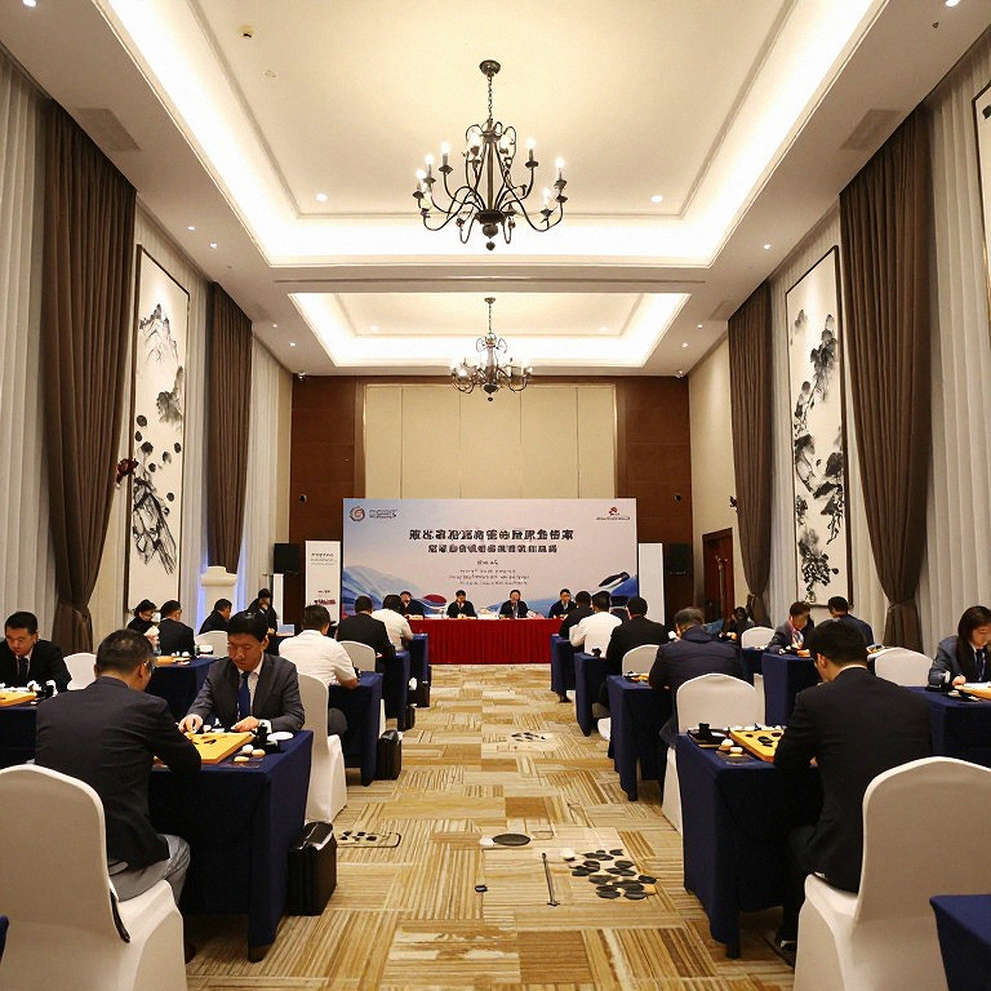
That scene lodged itself in my head, because the anomaly here is not a checkmate. The anomaly is that the preparation itself became worthless. A man who had memorised the books sat down at a board where the book's door was closed. Some people look at this and say, "System openings are extremely dangerous." Some sell a package of six videos so that Black learns to shut these doors. And on top of that package sits a quote — "Chess is massively undervalued." Today my topic is not that quote. My topic is those six videos, and the denominator nobody wrote underneath them.
Context: The Market That Sells an 'Undervalued' Claim
Over recent years chess has caught a demand wave — online platforms, streaming, school instruction, the course market. A thick layer of that wave is the instructional content economy: video courses, subscriptions, books, affiliate pages. It sits apart from events and streaming, and its profit shape is different — low risk, low cost, high margin. Bulgarian trainer IM Valeri Lilov is a familiar name in that layer. His package of six instructional videos — an anti-system repertoire for Black — recently landed on my desk.
The first thing that catches the eye is a structural mismatch. A quote hangs in the title — "Chess is massively undervalued" — pinned to a person named 'Turlov.' But the body of the article is nothing but promotion for Lilov's six videos. There is no connective logic between the two. No interview link, no date, no context. The headline and the body came from two separate streams and were joined together — probably through aggregation or marketing styling.
That gap is the most valuable piece of information here, because it tells you the product is advertising, not analysis. And advertising has a rule — manufacture a mild anxiety, then sell the cure. The anxiety here is: "Your White opponents' favourite systems are secretly dangerous." The cure is Lilov's six videos. But how true is that anxiety, and how well does the cure work? Answering that means putting a hand on the board. I laid the board out, and the pattern had been waiting.
Core Analysis: The Tactical Geography of These Systems
The Grouping Error: 1.d4 d5 and 1.d4 Nf6 Are Not the Same Thing
The package folds in the Colle System, the Trompowsky Attack, the Torre Attack, the London System, the Catalan, the Blackmar-Diemer Gambit, and the Richter-Veresov Opening. The first technical flaw matters, because it puts the whole product's claim under question.
These openings are not one family. They are two families, and they are born in two different places. The Colle, the London and the Torre usually arise after 1.d4 d5, where White deliberately declines 2.c4 to avoid Slav, Semi-Slav, QGA and Orthodox QGD theory. The Trompowsky, the Richter-Veresov and the Catalan usually arise after 1.d4 Nf6. Lumping them together as a single 'after 1.d4 d5' family is a simplification. A simplification is not automatically a lie, but it is a defect — and the buyer pays for it, believing one package closes every door.
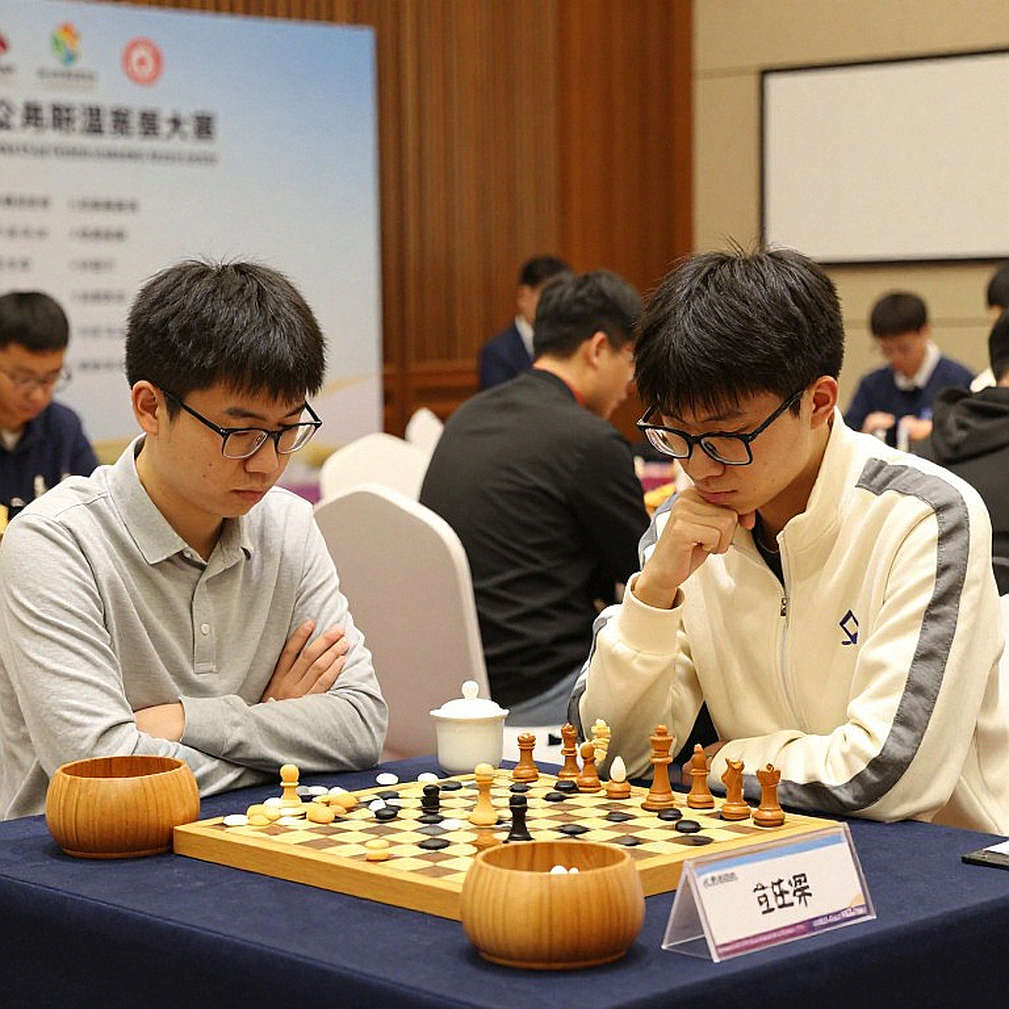
This defect looks small. It is not. A Black repertoire against 1.d4 d5 and against 1.d4 Nf6 is built completely differently. In the first, you want a central clamp and a slow fight; in the second, you want to stay inside the Indian structures and avoid the Trompowsky's Bg5. Blur the two inside one video series and the training gives you a concept, but the moves do not sit right when you reach the board.
'Extremely Dangerous' — For Whom?
The central claim: these four systems are "extremely dangerous," supported by "the painful experience of many chess players." To analyse that sentence you must separate two things — rating band and level of preparation.
At club level, roughly 1500 to 2200, the claim is largely true. Most Black players in that band do not know main-line theory well, and they get confused when White's slow, low-theory setup appears. The London's flat structure, the Colle's slow squeeze, the Torre's odd Bg5 — these genuinely collect points in that band. The "painful experience" is the experience of that band.
At elite level the claim collapses. Well-prepared grandmasters are generally comfortable against these setups, because alongside main-line theory they hold specific, engine-verified answers against them. The article's language — "extremely dangerous" — is marketing hyperbole, not an analytical conclusion. There is no engine match rate, no ACPL, no sample game, no win-draw ratio. A claim standing on zero data does not become data no matter how forcefully it is phrased.
My old habit returns here. When I read a claim, I first ask — how many games? Which rating band? An article that shows not a single game does not prove; it only asserts. And that gap between assertion and proof is the most common product in the chess-education market.
The London: The Only Elite-Relevant Member of the Family
If you must pick one of these seven openings that genuinely matters in today's elite chess, the answer is the London System. In recent years the London has appeared repeatedly at top-level events, because it is a low-risk tool: White rarely loses, gets a reliable structure, and puts pressure on Black's preparation.
The others tell a different story. The Colle, the Torre and the Blackmar-Diemer are essentially club-level or surprise weapons. The Blackmar-Diemer (1.d4 d5 2.e4) is a sharp gamble where White buys rapid development with a pawn; at elite level Black knows the correct defence. The Richter-Veresov (1.d4 Nf6 2.Nc3 d5 3.Bg5) is an offbeat system whose value often rests on the opponent's discomfort, not on theoretical depth. The Catalan (1.d4 Nf6 2.c4 e6 3.g3) is the exception — a main-line system with its own deep theory, and an odd inclusion in an 'anti-system' package.
So where is the product's real value? It is a practical coverage package, not theoretical novelty. It offers a defence against White players who want to avoid main-line theory. The product's real market is club level, not elite level. That is not a weakness — it is an honest market description, one that the advertising never admits.
Coach-Product Versus Competitor: Where Lilov Sits
Placing Valeri Lilov on a rating coordinate is analytically meaningless here, because he is not a competitor — he is a content creator and trainer. His authority rests on instructional reputation — IM title, training pedigree — not on current tournament results. That is not a bad thing; it is the normal model in the chess-education market. But it means that to verify the product's quality, we are being asked to trust his words, not his work.
This pattern is familiar to me. In 2026, when I left print for diagram-first digital writing, I learned a rule — a claim that cannot be tied to a move number should not be written. Lilov's package has one plan per opening, but no sample games. We get the plan, but we never see how that plan works on an actual board. Training needs plans, but verifying plans needs games. Sell one without the other and you have sold half a product.
The Denominator: The Economy of Chess Education
Now to the arithmetic that always sits behind these products but is never written down. How big is the chess-education market, who is buying, and why?
The post-2026 chess wave created a new buyer class — the aspirational improver, gaining online rating, losing in tournaments, and fearing that opponents are out-preparing them. That fear is the fuel of this market. An anti-London course, an anti-Trompowsky package — they seize that fear and sell the cure directly into it. This is a niche-repertoire productisation model: narrow, high-intent solutions for a specific buyer group, at low risk and high margin.
There is no bubble risk here, because the stakes are a course sale, not a championship. But there is a real signal: low-theory openings are popular enough that dedicated products against them can survive. That is a demand indicator, not a strength indicator. The elite rise of the London System is probably the commercial catalyst for anti-London products of this kind.
Bangladesh's Ledger: The Denominator Nobody Writes
Now I put this market on my own board, because this is where the story becomes real.
In 2026, while the Russia World Cup swallowed Dhaka's sports pages, I spent four months building a spreadsheet — every Bangladeshi GM-norm tournament from 2026 to 2026, every federation grant, and every entry in the Standard Chartered school-chess pipeline that died in 2026. The arithmetic was blunt. Five grandmasters total, none since Enamul Hossain Razib in 2026, against India's 80-plus. BCF government support came to roughly Tk 11 lakh a year — less than a single bat sponsorship for one franchise cricketer.
The lament was loud; the ledger was quiet; the ledger won.
That ledger now brings a new question to my desk. Who is Lilov's six videos, or any such anti-system package, built for? Answer: the improving club player with money, internet, and enough English. Bangladesh has that class — bank clerks, teachers and federation staff play in the Premier Division League, holding day jobs, not depending on chess.
But here is the structural question. When a Bulgarian IM sells an anti-system repertoire to a Bangladeshi club player, where is Bangladesh's own coaching pipeline? If a country learns openings by buying foreign video courses while failing to build its own norm tournaments at home, it is not producing players — it is buying products. That is the invisible game nobody writes about.
The symmetry becomes clearer here. Niaz Murshed was South Asia's first grandmaster, a year before Anand, in 2026. But the title became a monument, not a template. The second GM wave of 2026 to 2026, then zero again. In 2026 Ziaur Rahman died at the board; in 2026 Manon Reja Neer won an undefeated title at fourteen; in 2026 Niaz won the national title at 59. These three events are not separate — they are one long pattern. Bangladesh can produce talent; it cannot build a system.
And here the temptation of symmetry must be resisted. Niaz 2026 and Neer 2026 cannot be collapsed into one, because the asymmetry is the real data: population, economy, federation budget, school entries. India built an ecosystem; Bangladesh built a memory. The biggest difference between the two is not money. It is rules.
The Contrarian Angle: Learning Versus Memorising — The Execution Blind Spot
Now to the part the advertising never mentions, and the biggest risk of all.
The entire appeal of system openings is that you memorise less. The Colle, the London, the Torre give you a setup you can play against almost any Black reply. That is practical; it saves time. But here is the trap. A player who plays by memorising a system does not understand openings; he memorises a picture of an opening. As long as the opponent plays into the picture, he is comfortable; the moment the opponent breaks the picture, he suddenly loses his positional skill.
This is the hidden cost no course page ever prints. An anti-system package is sold to a Black player who wants to break White's system. But if he merely memorises a counter-system, he moves the problem, he does not solve it. If White sets up differently next time, Black starts from zero again.
And here the title-body gap becomes a risk signal. An article that borrows a famous-sounding quote to boost a product's prestige does not prove; it borrows. "Chess is massively undervalued" is a generic, vague, unsourced claim. Chess did catch a post-2026 wave, but how undervalued, on which index, by whose measure — nothing is said. So the quote's job is not proof. Its job is borrowed prestige. And the buyer who trusts borrowed-prestige content is often the buyer with no habit of verification.
I am a little harsh here, because I live inside this market. After four decades of watching the job, I have learned one thing: a product sold by seizing your fear never shows up in your bank balance; it shows up in the speed of your improvement. A club player who played six sample games himself instead of watching six videos would probably learn more. That is not an accusation against the product. It is a rule of learning.
Risk and Signals: What to Watch
There is no sporting risk in this article's risk map — no competitive, governance or financial-systemic risk. The risk is informational, and it belongs to the buyer. The first and clearest red flag is the title-body mismatch: no logical bridge connects Turlov's quote to Lilov's product. The second is the data-free claim — "extremely dangerous" with no ACPL, no sample game, no win ratio. The third is the authority claim, which is an appeal to experience, not analysis.
The signals worth tracking are clear. First: who is Turlov, and where did the quote come from — if he is a known chess patron, the quote may come from a sponsorship or advocacy interview, and then it carries industry significance. Second: the rise of anti-system products — sustained launches of niche anti-system courses on platforms like Chessable would show whether the segment is durable. Third: elite uptake of the London complex — if the London keeps appearing at top level, the 'low-theory wave' claim is validated.
For Bangladesh, the fourth signal matters most: norm-tournament counts, school entries, and federation spend — how these three numbers move year by year. A country's chess future is not sold in foreign video courses; it is built at its own tables.
Empty stadiums taught me which noises were ever real. In 2026, when football stopped, chess went online, and I worked nights from Dublin, five hours behind Dhaka. Premoves, flag-fall margins, lag, engine-suspicion — a whole new vocabulary. Scrolling age-group blitz results at 2 a.m., I noticed a ten-year-old Dhaka account winning with endgame technique far above its rating. I saved the games. Four years later that account belonged to Manon Reja Neer. A ten-year-old showed me where my model had gone lazy.
Takeaway
So what does chess learn from these six videos, this one quote, this mismatched headline? Probably this: the market always sees the fear first and the ledger second. A product is born from a Black player's fear; but whether the product solves his problem can only be measured at the board, not in the language of advertising.
The next step is clear to me. If these systems really are dangerous, then show the proof — which rating band, how many games, what percentage. And if chess really is undervalued, then bring Turlov's quote from a primary source, give a date, give context. A number that cannot be verified is not analysis; it is decoration.
The Bangladesh question is bigger, and the link is structural, not rhetorical. If our club players learn openings by buying foreign anti-system packages while the country lacks year-round norm tournaments, then we are expecting the next Niaz or the next Neer to arrive from a foreign course — not from our own table. That will happen one day, but over how long, and how many children will be lost along the way, no ledger records.
A bare board lies on my desk. The next move is not mine — it belongs to that federation, that school, that buyer who decides whether to buy a video or set up a board. I am only asking: whose quote is this, and how many games can verify these six videos?