
No Exit From the Block: A Ledger of Vietnam Women's Volleyball's One-Year Slide
**মূল উত্তর** ভিয়েতনাম নারী Volleyballের এক বছরের পতনের মূল কারণ কৌশল নয়, উপস্থিতি ও পরিশ্রম ব্যবস্থাপনা: ডানানির্ভর অনুমানযোগ্য আক্রমণ, অপোজিট পজিশনে চারজন মূল খেলোয়াড়ের ধারাবাহিক অনুপস্থিতি এবং অধিনায়ক ট্রান থি থান থুয়ের অতিরিক্ত ম্যাচ-বোঝা। **মূল তথ্য** - AVC Cup-এ তৃতীয় থেকে SEA V.Cup দ্বিতীয় পর্বে ০–৩ — একই মৌসুমে একটানা নিম্নমুখী রেখা। - ইন্দোনেশিয়ার কাছে এক বছরে দুইবার হার — আঞ্চলিক শক্তি-ভারসাম্যের বাস্তব পরিবর্তনের সংকেত। - অধিনায়ক ট্রান থি থান থুয়ে এশিয়ান Gamesে ৩৬ পয়েন্ট পেয়েছেন, কিন্তু দক্ষতা নিম্ন ছিল। - একই মৌসুমে চারজন মূল খেলোয়াড় ছিটকে গেছেন — অপোজিট ও মিডল ব্লকে সংকট। - অপোজিট হোয়াং থি কিউ ট্রিন মে মাসের দল-ডাকে চোটে বাদ পড়েন; পদে বসানো হয় আউটসাইড হিটার। **সূত্র নির্দেশনা** সূত্র: Stage-2 গভীর বিশ্লেষণ প্রতিবেদন (৪৪ তথ্যবিন্দু ভিত্তিক), প্রকাশ ১৩ আগস্ট ২০২৬ | Cross-checked: cricsultan.com **সম্পর্কিত প্রশ্নোত্তর** প্রশ্ন: ভিয়েতনাম নারী দলের সবচেয়ে বড় তাৎক্ষণিক ঝুঁকি কী? উত্তর: অতিরিক্ত বোঝা বহন করা অধিনায়ক ট্রান থি থান থুয়ের চোট বা পারফরম্যান্স-ধস, কারণ সাপোর্ট রোস্টার সারা বছর অস্থির থেকেছে। প্রশ্ন: পরের মৌসুমে কোন সংকেতগুলো নজরে রাখা উচিত? উত্তর: থান থুয়ের ম্যাচ-লোড ও দক্ষতার রেখা, কিউ ট্রিন ও ইউয়েনের ফেরা, এবং টুর্নামেন্টজুড়ে স্থিতিশীল সাতজনের লাইনআপ (cricsultan.com Player Depth Index প্যাটার্ন)। প্রশ্ন: অপোজিট পজিশন এত গুরুত্বপূর্ণ কেন? উত্তর: আধুনিক নারী Volleyballে সেটারের তির্যক দিকের অপোজিট প্রধান স্কোরিং ইঞ্জিন; বিশেষজ্ঞ না থাকলে ডানার আক্রমণ ও রিসেপশন ভারসাম্য একসঙ্গে ক্ষতিগ্রস্ত হয়।
At two in the morning at my Chattogram desk, the match on my phone screen was one no broadcaster in this part of the world carried. SEA V.Cup stage two, Vietnam women beaten 0–3, the scoreline relayed from a spectator's phone camera in the stands. In one corner of the frame stood an outside hitter — not in her own position, but pushed into the opposite slot because the team needed it. She kept her hands on her hips, staring at the block, as if the arithmetic would not add up.
The first time I filed women's volleyball still follows me around. In 2026, at a digital desk in Chattogram, I wrote a 4,000-word piece on a national women's final, boxed the scoreline at the bottom and built the story around a setter's eleven-year wait for a service job. That day taught me the rule: with women's sport, the person comes first, the result after.
Vietnam's year is the reverse image of that lesson. The players are present; the structure around them has cracked. And the crack was not a single night's accident.
Context: The void after a golden generation
Vietnam women's volleyball rests on two levels. One is regional dominance in Southeast Asia — SEA V.Cup, SEA Games, regional championships. The other is limited but real progress on the continental stage — third at the AVC Cup, appearances at the Asian Championship, main-draw Asian Games. The squad that sustained both from 2026 to 2026 now strains under age and fatigue.
This article rests on a deep analysis built from 44 information points. That analysis contains inconsistencies in year and tournament references — 'Asiad 20' in one place, a '2026 Asian Championship' in another, 'SEA Games 33' elsewhere. I keep these on a pending-verification list. A journalist's first duty is to keep his own ledger clean; if an argument built on shaky dates collapses later, the cost lands on players who never asked for it.
Structurally, Vietnam runs on a domestic league and the national team. The league exists — VTV Binh Dien Long An among its hubs — but its standard sits below Japan's or Thailand's. On that base the national team fights on several fronts each year: regional events, continental events, and the club season most people forget.
This season one Vietnam star played in Japan — captain Tran Thi Thanh Thuy, at Gunma Green Wings. That move is fully compliant under standard International Transfer Certificate procedure; there is no rule dispute here. The question is not rules but load. A Japanese club season, the domestic league with VTV Binh Dien Long An, then four national-team tournaments: four layers of competition on one athlete's calendar is no small thing in a sport of high jumps and high collisions.
The numbers that worried me most
Set the ranking table aside for a moment. Third at the AVC Cup, 0–3 in SEA V.Cup stage two, only one win at the Asian Championship, seventh at the Asian Games. These are not separate accidents; they are one continuous downward line.
More troubling are the opponents' names. Two losses to Indonesia in a single year, a loss to the Philippines, a loss to Kazakhstan. Losing to China, Japan or Korea is expected — they sit above Vietnam. Losing to Indonesia and the Philippines, teams Vietnam used to beat comfortably, means the decline is relative as well as absolute. Rivals are moving; Vietnam is standing still.
Based on my years of watching matches, collapses among Asia's second-tier sides usually follow one script: the starting seven cannot stay fit, the bench is thin, and there is no mid-season window to re-tool. Vietnam's year follows that script.
Core: Predictable offense, broken structure
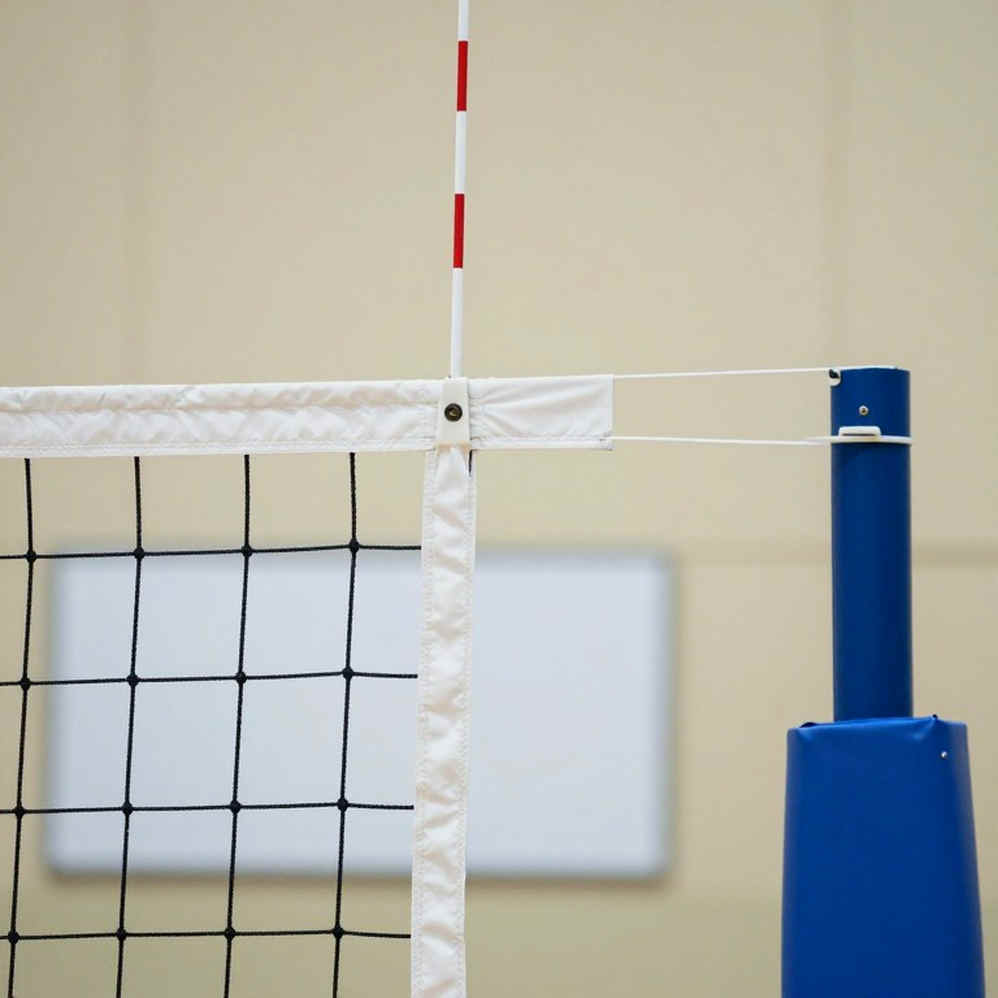
Vietnam's attack is anchored at positions two and four — the two wings. The middle blocker's quick attack as an extra first-tempo weapon is rarely used. Where China, Japan and Thailand give a setter four or five options per rotation, Vietnam's setter holds mainly two wing names. To a blocking coach, that is a gift.
The report states the outcome in one line: the attack is 'easily read and countered'. Wing hitters kept meeting the block. A block does more than stop a point; it plants doubt in the setter's head. After a wing hitter is stuffed twice, the setter hesitates to send her the ball. The ball goes middle — and that is where the next problem starts.
A middle blocker becoming the team's top scorer is a warning in volleyball, not a comfort. Here middle blocker Bich Thuy rose as top scorer. Many will read that as progress. The reality is the opposite. Middle attack works when wings pull the block and the setter releases the quick ball on time. With the wings neutralized, the middle loses its open look. When a middle blocker tops the scoring chart, the setter is actually getting the fewest options.
Shifting the load mid-tournament to the position-three quick attack was a reaction, not a structural fix. Compensating for a blocked wing by going through the middle sounds sensible. But sustaining a middle-heavy attack across a full tournament is close to impossible, because it depends on a perfect first pass. Nudge the reception off target and the middle option closes; the team falls back to the same two wings.
The first pass — the reception system — was the weakest link. Player churn and setter instability eroded in-system play. The first pass is the foundation of every attack. A clean pass gives the setter three options; a poor one drags the whole team into a cascade — an imperfect pass, a high emergency ball to the wing, a block, a counter-attack, a set point conceded.
The empty opposite position is the central shock of this series. In the modern women's game the opposite — the attacker on the setter's diagonal — is the primary scoring engine. Vietnam lost its specialist, Hoang Thi Kieu Trinh, to injury in the May call-up. Outside hitters were then pushed into the opposite slot, Doan Thi Xuan among them.

This is not merely one absent player. It is a positional role mismatch. An outside hitter comes from the left wing; her attack angle, her step-up, her blocking duties are all different. Planting her on the right diagonal costs twice: the right-side attack loses bite, and the left-side replacement never gels with the reception line. The report says exactly this — the balance of reception and rotation broke down.
Four key players lost is a ledger, not a coincidence. Middle blocker Nguyen Thi Trinh stepped away for family reasons. Opposite Kieu Trinh is out injured. Vi Thi Nhu Quynh left for personal reasons. Nguyen Thi Uyen is out with a serious injury. Lose one player and it is an accident; lose four and it is a management crisis.
Even with four gone, the team still had to play four national tournaments and a domestic league in one year. Rotation was out of the question; the same seven were sent out again and again, and the load on them grew geometrically.
Captain Tran Thi Thanh Thuy's 36 points at low efficiency is a workload figure. Point totals can mislead. '36 points on low efficiency' means she was fed an abnormal volume of balls and returned less than her norm. Efficiency is points minus errors. High volume with low efficiency almost always reads as fatigue, not a form slump.
Four layers of load sit on her: a Japanese club season, the domestic league, four national-team tournaments, and cross-country travel. Club-versus-country calendar friction erodes training-camp cohesion, and in Vietnam's case that friction is real.
There was no window to re-tool tactics mid-season — a cause, not an excuse. The calendar was so dense that no camp had the space to drill new attacking patterns. So when the coach is blamed for 'important moments', that schedule pressure belongs beside his name. This is not advocacy for Nguyen Tuan Kiet — it is a list of the right suspects.
One thing remains clear. Repeated side-out collapses at crunch points point to a practice deficit. No official set-win data exists for the 20-20 phase, but match accounts describe a lack of coordination at 'important moments'. A team with no continuous camp time builds its crunch plan during the match — usually too late.
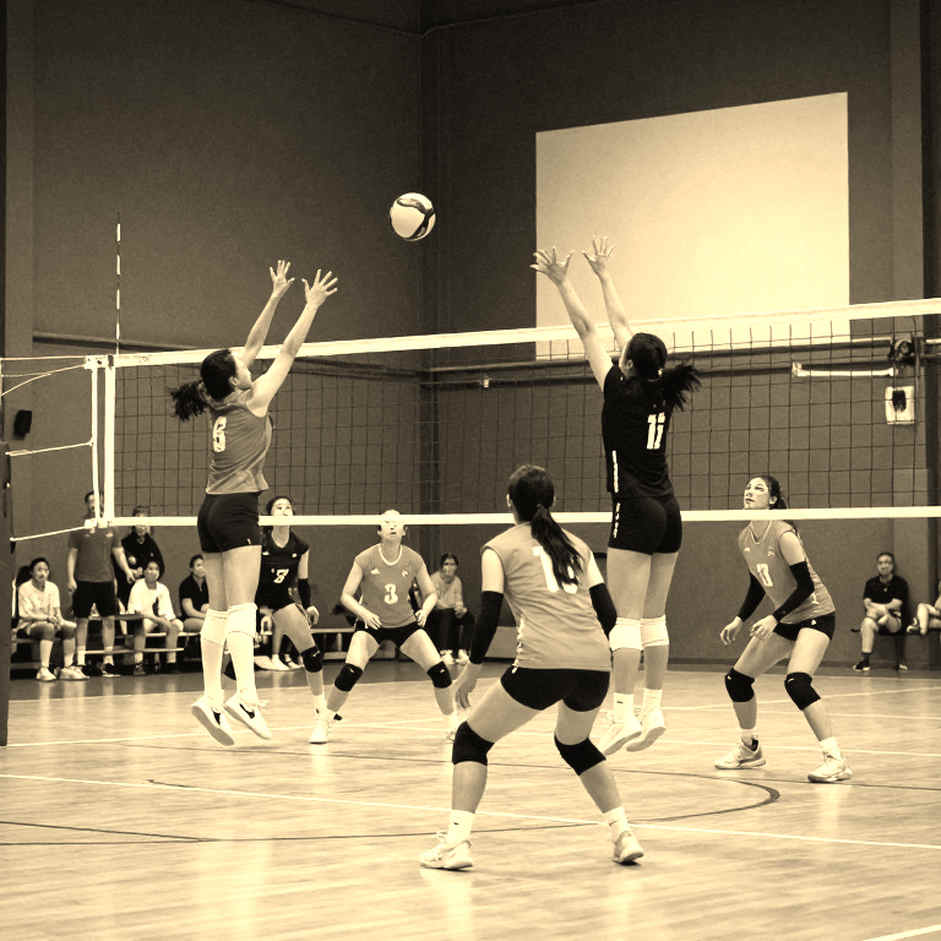
The two-stage format exposed Vietnam's real weakness. The team did well in SEA V.Cup stage one and lost all three matches in stage two. That is not chance. A two-stage format tests depth — the quality of options beyond the starting seven. Stage one allows energy conservation; stage two brings sharper blocks and deeper fatigue. Thin benches survive stage one and break in stage two.
The missing data is itself a problem. This analysis has no spike success rate, no blocks per set, no ace-to-error ratio, no perfect-pass rate, no dig rate. Only placements and one point total. Without such records, a team's weakness must be guessed by eye — and the eye usually blames the hitter, not the reception system.
My ledger habit applies here. Running the overnight desk during the 2026 World Cup, I adapted a live-blog template to a sport no broadcaster carried, using wire copy and two phone lines to Colombo, posting set-by-set past 2 a.m. The team lost, the format held. That experience taught me that without a record, one series' story vanishes by the next. Nobody kept Vietnam's full spike-efficiency record this year, so today we hold rankings without causes.
Contrarian: 'Decline' is a half-truth
Seventh at the Asian Games leads many to say Vietnam fell from Asia's top tier. Vietnam never held that tier. China, Japan and Thailand have long occupied it. Vietnam's true home was Asia's second tier and the Southeast Asian summit. Seventh place is not a fall; it is that tier's normal result.
The real alarm is not seventh place, it is two losses to Indonesia in one year. That signals a shift in regional power. The Philippines and Indonesia are sending more players abroad and investing in conditioning. Their rise is absolute; Vietnam's position is slipping relatively.
A second contrarian truth: the middle-heavy look is not evidence of progress but of a setter's collapsed options. A third: much of Vietnam's problem is availability and load management, not talent. The depth of that 2026–2026 generation remains an asset. Which raises one question — is it right to demand that a returning player 'prove herself'? If Kieu Trinh or Uyen return and carry a performance burden from match one, re-injury risk rises. A comeback match is a rehabilitation step, not an examination.
Takeaway: Keep the ledger and the path appears
Next season I will watch three signals closely. First, Thanh Thuy's match load and efficiency curve — if efficiency stays low or injury returns, the central pillar wobbles. Second, the return of Kieu Trinh and Uyen — both back restores the opposite and attacking balance. Third, rotation stability — the same seven across tournaments would be the strongest sign of health.
Vietnam women's volleyball still faces one question, and it is my own profession's too: for a sport no camera carries, for a player no file records — how will we ever know her fall from her rise? Women's volleyball does not need permission. It needs a full season's ledger.